

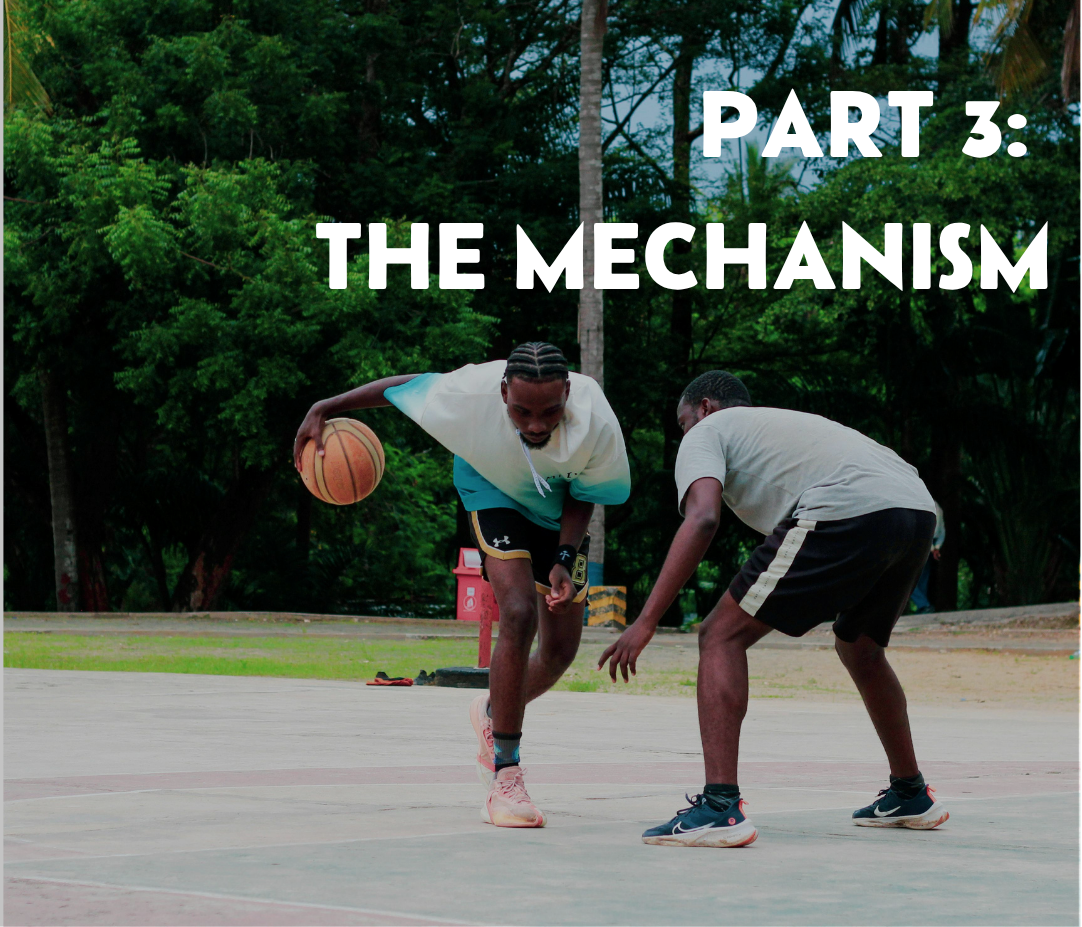
Relearning to solve the problems of sport
If physical capacity is the foundation and progressive exposure is the ramp, then skill development is the mechanism that ultimately restores performance.
Because performance isn't rebuilt through strength, conditioning, or workload tolerance alone. It's rebuilt by relearning how to solve the problems the sport presents. This is where I believe many rehabilitation processes fall short.
Athletes spend months rebuilding strength, power, movement quality, neuromuscular control, and conditioning. They gradually tolerate greater workloads and more complex movement demands. Then, near the end of rehabilitation, they're often handed back to the coaching staff.
Almost as though rehabilitation ends where sport begins…
Not all chaos is sport chaos

Sport is chaotic.
But not all chaos prepares an athlete for sport.
Randomness alone doesn't create representative practice. Unpredictable cues, flashing lights, and arbitrary commands may increase complexity, but they often remove the very information athletes use to make decisions during competition.
The goal isn't simply to make drills harder.
It's to expose athletes to the same problems they'll solve when the game begins.
Chaos without context is just noise.
Randomness is mistaken for sport specificity
Flashing lights, random cone drills, reaction apps, and unpredictable verbal commands can all create variability.
But variability alone does not recreate sport.
Sport-specific practice is not simply movement performed in response to something unexpected. It requires athletes to perceive meaningful information, interpret the situation, and select an appropriate solution based on the demands of the game.
A random stimulus may force a reaction.
A representative stimulus requires a decision.
Random is not the same as representative
The question is not whether a drill is unpredictable.
The question is whether the information guiding the athlete’s response resembles the information available in competition.
Does the athlete read an opponent’s position?
Recognize space opening or closing?
Adjust to the speed and direction of play?
Choose between multiple realistic options?
Without that connection, the drill may be reactive without being representative.
Variability Needs Context
Variability is valuable when it exposes the athlete to different versions of the problems they will actually encounter.
Change the defender’s position.
Alter the available space.
Manipulate timing, speed, or numerical advantage.
Require the athlete to choose between realistic sport actions.
The goal is not to make the drill look chaotic.
It is to preserve the relationship between information, decision, and action.
Sport specificity is not created by randomness. It is created by representative problems.
This is THE MECHANISM
It's the process of relearning how to solve the technical, tactical, perceptual, and decision-making problems sport presents.
Athletes don't simply cut, sprint, or jump—they perform these movements in response to constantly changing information. The objective is not simply restoring movement capacity.
It is restoring movement solutions.
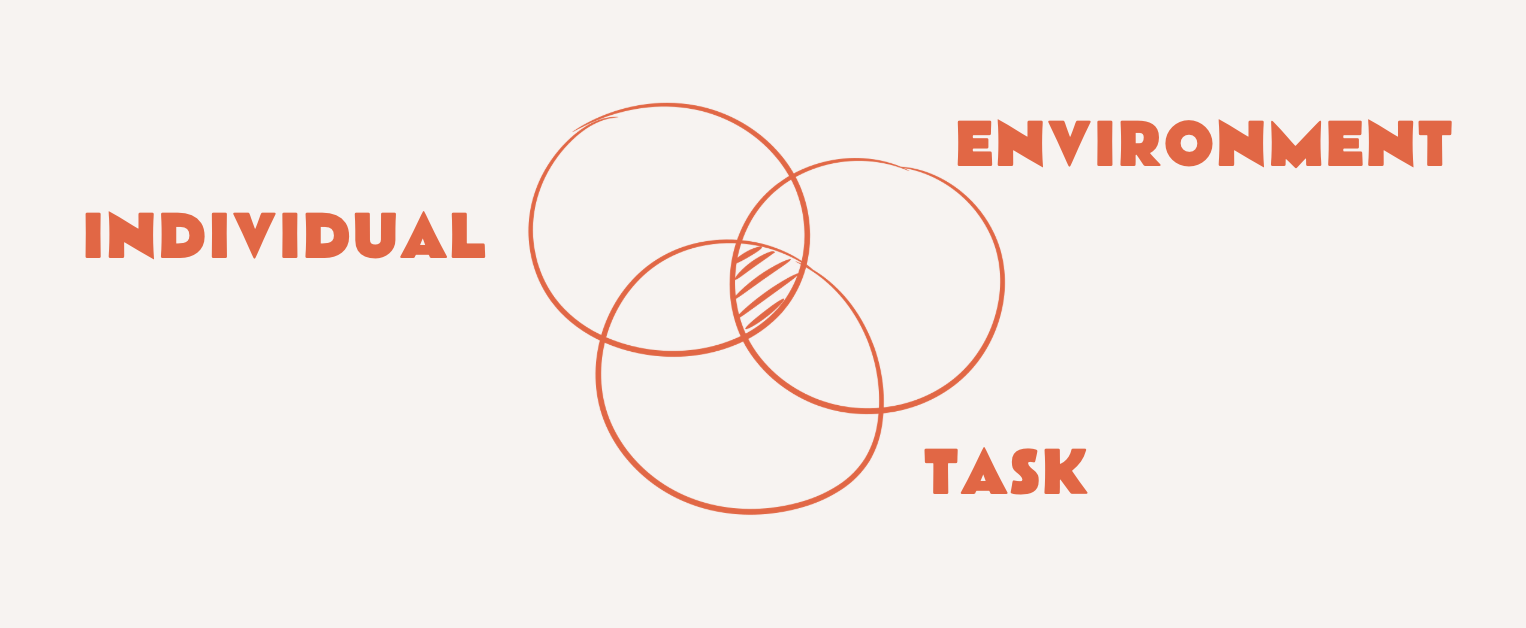
Rather than simply returning athletes to where they were before injury, rehabilitation can become an opportunity to make them more complete and impactful players.
Modify drills, court size, number of player, athlete role, contact, practice segments, etc.
But develop… sport movement.
The intentionality shouldn't stop when practice begins.
Avoid handoffs
The transition shouldn't be a handoff…It should be a shared process.
An athlete may be physically prepared to sprint, jump, cut, and tolerate practice loads, but that doesn't necessarily mean they're ready to perform. Performance requires applying those physical qualities within the constantly changing technical, tactical, perceptual, and decision-making demands of sport.
Those are skills…and skills must be practiced.
The closer rehabilitation moves toward return to performance, the more rehabilitation should begin to resemble the sport itself. Physical preparation remains essential, but its purpose shifts. The objective is no longer simply producing force or tolerating load. It's learning how to express those qualities while solving the problems the game presents.
For a basketball player, that might mean learning key actions, creating separation off a screen, reading a defender, recognizing help rotations, finishing through contact, or making the correct pass under pressure.
Those qualities cannot be restored in the weight room alone.
Sport development: a shared responsibility
For clinicians working in outpatient or private practice settings, this often means looking beyond the walls of the clinic. You may not be the right person to teach sport-specific solutions, but you can help identify who is. Building relationships with coaches, skill trainers, performance coaches, or other practitioners allows rehabilitation to continue progressing after the athlete leaves your care each day. The goal isn't simply discharging the athlete back to sport. It's creating continuity between rehabilitation and performance.
For practitioners embedded within high-performance environments, the challenge is different. The resources often exist within the organization, but the responsibility shifts toward coordinating them effectively. Player development coaches, assistant coaches, strength and conditioning staff, athletic trainers, sport scientists, and medical providers all contribute different expertise. The question isn't who owns the athlete. It's who is best positioned to facilitate the next step in their development.
Solutions and timing
The offseason provides opportunities to deliberately integrate rehabilitation with skill acquisition. There is time to build physical qualities while simultaneously rebuilding technical proficiency.
During the competitive season, those opportunities become far more limited. Team practices are designed around preparing healthy athletes to win games, not around one athlete's rehabilitation. Travel compresses schedules, recovery often takes priority, and opportunities for individual skill work become increasingly scarce. Skill development may need to occur in short pre-practice sessions, post-practice windows, on off days, or during brief stretches between road trips.
A JOSPT blog on integrating rehabilitation into team practice in the NBA highlighted an idea that strongly resonates with me: rather than viewing practice as an all-or-nothing event, clinicians and coaches should think about how practice constraints can be manipulated to create appropriate rehabilitation exposures. By modifying drill selection, court space, player numbers, athlete roles, or the portions of practice an athlete participates in, rehabilitation can become integrated within practice rather than occurring entirely outside of it.
That perspective reinforces an important point: rehabilitation should adapt to the realities of the competitive season, not expect the competitive season to adapt to rehabilitation. The question shifts from
"Can they practice?"
to
"How can today's practice move them one step closer to performance?"
This is where collaboration becomes essential. Coaches understand the technical and tactical objectives of practice. Medical and performance staff understand the athlete's current physical capacity. Together, they can identify opportunities that neither group would likely recognize alone.

Alignment is everything
When everyone is aligned, the process becomes seamless.
Coaches understand understand the technical demands being introduced and what the athlete may be missing.
Medical and performance staff understand the what the athlete is capable of and ready for.
The athlete experiences one coordinated progression rather than moving between disconnected departments.
Ultimately, rehabilitation isn't complete when an athlete has restored physical capacity. It's complete when they can consistently express that capacity to solve the problems their sport demands.
1. The FOUNDATION builds the physical qualities.
2. The RAMP prepares athletes to tolerate the demands of sport.
3. The MECHANISM is what transforms those qualities into performance.
Only when all three work together can we truly move beyond returning athletes to participation and begin restoring meaningful performance.
Citation: Taberner M, Singh H, Avedesian J, Murphy B, Russell J, Little D, Taylor D. Designing practice “on the road” when returning to sport in the NBA: finding structure amidst the chaos of the play-offs. JOSPT Blog. Published May 17, 2025. Accessed July 4, 2026. https://doi.org/10.2519/jospt.blog.20250517
TOMMY OTLEYPhysical therapist, sport scientist, educator, and researcher working at the intersection of rehabilitation and performance.
READ MORE

Returning to competition is an important milestone, but it does not mean performance has been restored. This edition of The Film Room explores the gap between return and performance, why performance requires an outcome, and how role, opportunity, and context complicate what “back” really means. If we say an athlete has returned to performance, we have to be able to show it.