

Performance Data Primer: Translation
Measurement vs reality
“The map is not the territory.”
Alfred Korzybski's phrase is one I find myself coming back to frequently when thinking about performance data. The measurements we collect are not the athlete. They are representations of some part of the athlete, the environment, or the performance we are interested in understanding.
A force-time curve is not neuromuscular function. High-speed distance is not load. A wellness score is not readiness. Even the best dashboard we can build is still only a representation of what is happening in the real world.
In the previous installment of this series, I focused on the assumptions that allow us to build these representations. We make assumptions when we collect data, when we process it, when we select metrics, and when we interpret what those metrics mean.
But eventually we have to do something with them.
At some point, we have to put the map down, look at the territory in front of us, and decide where to go.
That is the translation problem.
Modern sport science has become incredibly good at generating information. Depending on the environment, we can collect player tracking, force plates, strength testing, wellness, sleep, hydration, medical information, practice participation, game statistics, video, and countless other sources of data. We can take millions of observations and turn them into metrics, profiles, models, dashboards, and reports.
But none of those things inherently tells us what to do next.
That distinction is important.
The goal of performance data is not simply to create a better representation of the athlete. The goal is for that representation to help us make better decisions about the athlete.
And that requires something beyond measurement.

Knowing, applying, deciding
Thousands of years before sport science departments existed, Aristotle distinguished between different forms of knowledge. Three of those ideas provide an interesting lens for thinking about how performance information moves into practice: epistēmē, technē, and phronēsis.
The distinctions matter because we often use the word knowledge as though knowing something, knowing how to apply it, and knowing what should be done are the same thing.
Aristotle treated them differently.
Epistēmē asks, what do we know? It is concerned with scientific and theoretical knowledge and the principles we use to understand the problem in front of us. In sport science, that extends well beyond understanding a particular measurement. It includes what we know about physiology and biomechanics, how athletes adapt to training, the constructs we are trying to represent, how those constructs can be measured, and the training philosophies that shape how we believe adaptation should be developed. It is the scientific foundation we bring with us before we ever open the dashboard.
Technē asks, how do we apply it? It is the craft, skill, or know-how required to take that knowledge and make it usable in practice. In sport science, this might mean building the testing process, data pipeline, dashboard, reporting structure, or communication system that allows our knowledge to actually enter the performance environment.
Phronēsis asks, what should we do? It is practical wisdom: the judgment required to determine an appropriate course of action within a particular context. It is not simply knowing that something is true or knowing how to operationalize it. It is deciding what ought to be done here, with this athlete, in this situation, right now.
What do we know? How do we apply it? What should we do?
Those questions are related, but they are not interchangeable.
And that distinction becomes increasingly important as our ability to collect information continues to outpace our ability to use it.
Epistēmē: What do we know?

Before we can translate information into practice, there has to be a foundation for how we understand the problem in the first place.
That is where epistēmē begins.
For a sport scientist, what we “know” is much larger than the data sitting in front of us.
It includes what we know about physiology. How does an athlete adapt to a training stimulus? What creates fatigue? What qualities are we actually trying to develop?
It includes biomechanics. How does the athlete produce and absorb force? How do movement strategies change across tasks, speeds, or levels of fatigue?
It includes training theory. What stimulus are we trying to create? How much exposure is enough? How should that exposure progress over time?
And it includes measurement. What construct are we trying to represent? Does the technology actually measure it? How reliable is the measurement? What assumptions were required to turn the raw signal into the number sitting on our dashboard?
All of this becomes part of the scientific foundation from which we interpret information.
That distinction matters because data does not arrive without context.
Imagine an athlete's countermovement jump is below their typical range.
The number itself tells us very little.
Our understanding of measurement tells us whether the change is larger than the normal variability of the test. Our understanding of biomechanics helps us examine whether the athlete achieved the same outcome using a different movement strategy. Our understanding of physiology and adaptation shapes how we think about why that change may have occurred. Our training philosophy influences whether we see that response as something concerning, something expected, or potentially part of the stimulus we were trying to create.
The data point did not contain any of those interpretations.
We brought them to the data.
This is why epistēmēmatters so much to translation. The scientific foundation we bring to a problem shapes what we see when we look at the information.
Two practitioners can look at exactly the same dataset and reach different interpretations, not necessarily because one cannot read the data, but because they are approaching it with different models of physiology, adaptation, measurement, and training.
And even with a strong scientific foundation, we can know an incredible amount without knowing exactly what to do.
Take a basketball player walking into practice.
We might know that their countermovement jump is below their typical range. Yesterday's practice exposure was higher than usual. Their reported sleep was worse than normal. Their wellness scores look fine. They tell us they feel great.
Tomorrow is a game.
We have information about the athlete.
We also have a scientific framework for interpreting that information.
But do we know what to do?
Not necessarily.
This is one of the strange problems created by modern performance technology. More information can improve our understanding without necessarily making the decision any easier.
In many cases, we have invested heavily in the front end of the process. We have better sensors, cleaner databases, automated pipelines, increasingly sophisticated models, and much better ways to visualize information.
Better data does not replace the knowledge required to interpret it.
And even better interpretation does not automatically tell us what should happen next.
Maybe we should start at the other end

Part of the problem may be that we often begin with the data.
We purchase a technology. It produces 40 variables. We collect them because they are available. We build a dashboard around them.
Then we ask what we can do with all of it.
I have certainly been guilty of this.
But translation probably works better when we start at the other end.
What decision are we trying to make?
Maybe we are trying to determine whether an athlete should progress in rehabilitation. Maybe we are deciding how much court exposure they need this week. Maybe we are trying to understand whether a physical quality has actually changed. Maybe we are deciding whether an athlete needs additional conditioning or whether today's practice already provided the stimulus we wanted.
Once we understand the decision, we can work backward toward the information that might improve it.
That changes the question from, “What can we do with this data?” to, “What information would actually help us make this decision?”
The difference is subtle, but I think it matters.
The first approach makes the data the center of the process.
The second makes the decision the center.
Technē: How do we apply it?

Even when we know something useful, that knowledge still has to enter practice.
This is where technē becomes important.
Technē is often translated as craft, skill, or practical know-how. The important distinction is that it is not simply possessing knowledge. It is knowing how to make something happen with that knowledge.
For a carpenter, understanding the properties of wood is different from being able to build a table. For us, understanding the properties of a metric is different from building a system that allows that metric to meaningfully influence practice.
That system might be highly technical. It could involve APIs, databases, automated pipelines, statistical models, and interactive dashboards.
Or it might involve walking into a coach's office.
Both are forms of technē if they successfully move useful information into practice.
This is why I don't think there is a single “best” way to communicate performance data.
A dashboard might be perfect in one organization and completely unnecessary in another.
If a sport scientist works directly alongside a coach every day, the best reporting system may be walking into the coach's office and having a 90-second conversation.
That system doesn't look particularly impressive on a conference slide.
It may work extremely well.
Scale that same problem across multiple teams, dozens of practitioners, medical departments, performance departments, administrators, and coaches, and the solution changes. Now standardized definitions, databases, automated reports, dashboards, permissions, and communication pathways become much more important.
The goal isn't to build the most sophisticated system.
It is to build the system that allows information to reliably reach the people who need it when they need it.
The medium matters
This is why communication cannot be separated from translation.
We often talk about communicating data as though the challenge is simply making a better visualization.
Sometimes it is.
Often it isn't.
A dashboard works well when someone needs to explore information over time. A report can work better when information needs to be summarized and documented. An alert is useful when someone simply needs to know that something changed. A multidisciplinary meeting allows several perspectives to be integrated before a decision is made.
And sometimes the best data visualization is a conversation.
The mistake is assuming that because information can be displayed, it should be displayed in the same way to everyone.
A sport scientist might need to interrogate 20 variables to understand what happened.
A coach may need to know three things.
What happened?
Does it matter?
What should we consider doing about it?
Translation requires understanding the information.
Technē requires understanding how to get the useful part of that information to the person who actually needs it.
Not Everyone Needs Everything
One of the harder lessons in communicating performance data is that just because we collected something does not mean everyone needs to see it.
This can be difficult for those of us who enjoy the data.
We spent time collecting it. We cleaned it. We processed it. We checked it. We built something that we think is interesting.
So naturally, we want to show it.
But good translation often requires us to do the opposite.
Think about what happens inside an athlete-tracking system. Millions of raw observations may eventually become hundreds of derived variables. We might identify 20 metrics that we actually trust. Five may be relevant to the question we are currently asking. Perhaps two meaningfully influence the decision.
The conversation with the coach might contain one.
A tremendous amount of information disappeared along the way.
That isn't necessarily a failure of communication.
It might be the point.
Translation requires compression. The skill is knowing what can be removed without removing the meaning.
Too much compression and we oversimplify the problem. Too little and the important information gets buried.
The goal is not to show people everything we know.
The goal is to give them what they need to make the decision in front of them.
Phronēsis: What should we do?

Eventually, the information gets where it needs to go.
Then comes the harder part.
What should we actually do?
This is where phronēsis becomes particularly important.
Phronēsis is often translated as practical wisdom, but contextual judgment gets closer to why it matters in performance environments. It is the ability to take what we know, consider the circumstances surrounding the decision, and determine an appropriate course of action.
Unlike epistēmē, phronēsis is not primarily asking what we know.
Unlike technē, it is not asking how we can put that knowledge into practice.
It is asking:
Given what we know and what is happening around us, what should we do?
Let's say an athlete's countermovement jump has changed meaningfully from their normal values.
That is an observation.
We might interpret that change as evidence that the athlete is responding differently than usual.
That is an interpretation.
Then we decide to reduce their practice exposure.
That is an action.
We have a tendency to collapse those three steps.
The number changed, therefore the athlete is fatigued, therefore training should change.
A red box on the dashboard makes that process even easier.
But the measurement never actually made that decision.
We did.
And there is a lot that happens between the measurement and the action.
Maybe the athlete's strength testing looks completely normal. Maybe they feel great. Maybe yesterday's training explains the change. Maybe this metric is particularly variable for this athlete. Maybe today's practice is strategically important. Maybe the athlete needs the exposure we are considering removing.
The number still matters.
It just doesn't exist outside of everything else.
The decision lives in a system
This is where systems thinking becomes particularly important.
Imagine that our performance data suggests an athlete may benefit from doing less today.
From the perspective of one dataset, that recommendation may make perfect sense.
But the coach needs the athlete to participate in tactical preparation for tomorrow's opponent. The strength coach is trying to expose the athlete to a particular physical stimulus. The medical staff wants progressive exposure. The athlete feels good and wants to practice. Another player at the same position is unavailable.
So what is the correct decision?
There may not be one.
There is a decision that has to be made within the system that exists today.
This is one of the reasons I think the promise of completely data-driven decision-making is somewhat misleading.
The data does not exist independently of the athlete, coach, schedule, environment, goals, or consequences of the decision.
Sport is a complex system.
Our data is one source of information entering that system.
It may be incredibly valuable information.
But it is still an input, not the answer.
Phronēsis is what happens when that information encounters everything else.
When a flag becomes a decision
This is also why I think we have to be careful with thresholds.
Thresholds are useful. They help us simplify information and recognize when something deserves our attention.
But there is an important difference between an analytical threshold and a decision threshold.
Maybe a metric falling 1.5 standard deviations below an athlete's normal values turns a box red.
What does the red box actually mean?
Hopefully, it means something like: look here.
It doesn't necessarily mean: do less.
Those are very different statements.
The threshold tells us that the information deserves attention. The decision requires us to determine whether that information is strong enough, and important enough, to change what we otherwise planned to do.
And that threshold should depend on the decision.
If the consequence is simply asking the athlete another question, we probably don't need much evidence.
If the consequence is removing an athlete from an important practice, we might want considerably more.
This is where practical wisdom becomes difficult to replace with an algorithm.
The same information can appropriately lead to different decisions depending on the context surrounding it.
Don't lose the uncertainty along the way
There is another challenge with translation that I think deserves more attention.
Information tends to become more certain as it travels.
The sport scientist may begin with a nuanced interpretation:
This metric is meaningfully different from baseline, but it is somewhat variable and the other measures we collected look normal.
That becomes a red flag on the dashboard.
The red flag becomes, “Sport science says he's fatigued.”
We made the message easier to communicate.
We also changed it.
Good translation should simplify information without creating certainty that wasn't present in the original measurement.
That doesn't mean every conversation with a coach needs confidence intervals and measurement-error calculations.
It means preserving enough of the uncertainty to make the decision appropriately.
Sometimes the most useful recommendation isn't “he's good” or “he needs less.”
It is simply:
There is enough here that we should pay closer attention today.
That can still change behavior.
And sometimes that is exactly what the data should do.
Knowing, Applying, and Deciding have to work together
This brings us back to the distinctions between epistēmē, technē, and phronēsis.
None is particularly useful on its own.
Epistēmē without technē
We know something, but cannot effectively put that knowledge into practice.
The analysis sits in a spreadsheet.
We may understand the physiology. We may understand the training process. We may understand the construct and have identified a meaningful change in a measurement.
But if that information never reaches the people making the decision—or reaches them in a form they cannot use—our knowledge has very little practical effect.
Technē without epistēmē
We have sophisticated systems for communicating information without being certain the information represents what we think it does.
The dashboard looks incredible.
The data updates automatically.
The reports arrive every morning.
But the construct underneath them may be questionable. Or perhaps we are communicating a metric extremely well without having a strong physiological or training rationale for why anyone should care about it.
Efficiency does not rescue poor measurement.
And sophistication does not make information meaningful.
Epistēmē and technē without phronēsis
We understand the information and have built an excellent system for applying it, but we assume the output dictates the decision.
The number turns red, so we intervene.
In this case, the scientific foundation may be sound and the communication system may work exactly as designed.
What is missing is judgment.
Phronēsis is what allows us to recognize that the same information may mean something different on Monday than it does on Friday. It allows us to consider the athlete, the schedule, the training goal, the coach's needs, the uncertainty in the measurement, and the consequences of acting or not acting.
Good translation requires all three.
We have to understand what we know.
We have to develop the craft and systems to apply it.
And we have to develop the judgment to decide what should happen next.
Then see what happened
There is one final piece that I think is easy to miss.
We made the decision.
What happened?
If we reduced the athlete's exposure, did they respond the way we expected? If we added conditioning, did we get the adaptation we wanted? If we decided the red flag didn't warrant changing practice, what happened afterward?
Did the metric return toward normal?
Did performance change?
Was our interpretation correct?
Was the recommendation even implemented?
A performance-data system shouldn't end when the report is sent or the recommendation is made.
The action creates new information.
That information should feed back into the system.
Over time, we begin to understand not only what our measurements look like, but what tends to happen when we act on them.
That experience matters.
Maybe that is part of how phronēsis develops in the first place.
Practical wisdom is difficult to develop from a textbook or dashboard alone. It develops through repeated exposure to decisions, their context, and their consequences.
We collect information.
We interpret it.
We make a decision.
Then reality tells us something about that decision.
And we learn.
Back to the map
The map is not the territory.
That should make us humble about our measurements, but it shouldn't make us dismissive of them.
Maps are useful precisely because they simplify reality. They allow us to see patterns, understand where we are, remember where we have been, and make informed decisions about where we might go next.
Performance data can do the same.
But the value of the map isn't determined by how many landmarks we can fit onto it.
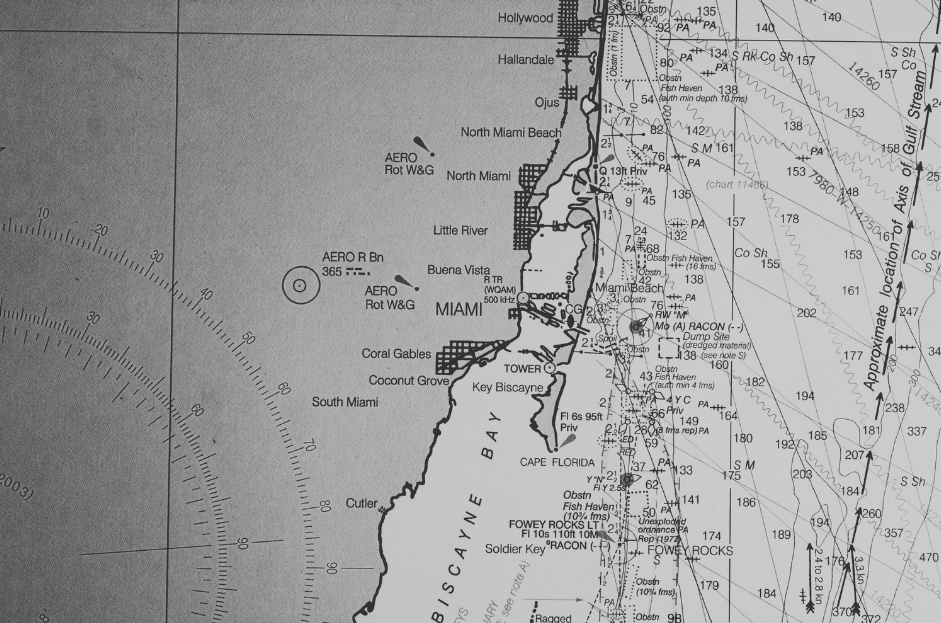
At some point, someone has to use it.
Epistēmē helps us answer: What do we know?
Technē helps us answer: How do we apply it?
Phronēsis helps us answer: What should we do?
Performance data contributes to the first question, but it does not answer it on its own. We bring our understanding of physiology, biomechanics, measurement, adaptation, and training to the information we collect.
Our craft and systems help us address the second.
But the third will always require something more than another metric.
As our technology improves, we will continue to build better maps. We will collect more information, automate more of the processing, integrate more sources of data, and develop increasingly sophisticated models of the athlete.
That progress is exciting.
But I don't think the ultimate goal should be a system that removes uncertainty and tells us exactly what to do.
The goal should be a system that helps us navigate uncertainty better.
Better measurement should help us ask better questions. Better analysis should improve our understanding. Better communication should get useful information to the people who need it. Better systems should help those people make better decisions.
The goal was never to build the perfect map. It was to make better decisions in the territory.
TOMMY OTLEYPhysical therapist, sport scientist, educator, and researcher working at the intersection of rehabilitation and performance.

READ MORE
As sport science becomes increasingly data-driven, collecting and analyzing information is only part of the challenge. This edition of The Film Room explores how we translate data into practice through the lens of epistēmē, technē, and phronēsis—moving from what we know, to how we put that knowledge into practice, to the judgment required to decide what we should actually do.