


A measurement problem…
We like measuring performance. Or, more accurately, we like measuring the things we believe contribute to it. We measure strength, jump performance, workload, movement demands, minutes played, efficiency, and production. We collect each of these because they tell us something about the athlete. The challenge begins when we start asking any one of them to tell us everything.
A strength test measures strength. A force plate tells us something about how an athlete produces force. Tracking data tells us something about exposure. A box score tells us something about what happened in competition. All of those measurements matter, but none of them, by itself, is performance. They are pieces of the system that produces it.
A better starting point may be to think about performance as a state the athlete occupies at a given moment. That state is not fixed. It is constantly in flux. McClean and colleagues frame this as a performance-state problem. Rather than treating performance as fixed, they describe it as influenced by multiple physical and nonphysical factors and changing over time. In their view, that state is dynamic and not well captured by a single measurement.
That changes the measurement problem.
The question is no longer simply: What should we measure?
It becomes: How do we measure a state that is always in flux, dependent on context, and shaped by multiple interacting factors?
That is a much harder problem. And it is probably closer to the one we are actually trying to solve.
Performance isn’t one thing
In basketball, performance is not simply what an athlete can produce in isolation. It is what they can express inside a role, among teammates, against opponents, under fatigue, and within the decisions of a coaching staff.
A player’s minutes can decrease because they are physically limited. They can also decrease because another player emerged, the rotation changed, the system changed, or their role changed. A player can regain strength and still struggle to create separation. They can regain jump height and still lose effectiveness late in possessions. They can produce the same points per game while doing it with a completely different usage rate, shot profile, or defensive responsibility.
The number is real, but the meaning of the number depends on context. That is why performance in team sport is so difficult to reduce to a single metric. McClean and colleagues make this point through a complex-systems lens. They argue that performance and injury are better understood through nonlinear interactions between multiple physical and nonphysical factors than through isolated outcome measures interpreted one at a time.
So strength matters. Power matters. Workload matters. Confidence matters. Opportunity matters. Tactical fit matters. Production matters. But none of those is performance by itself.
Performance is what emerges when those things interact.
And if we collapse that complexity into one number too quickly, we may not gain clarity. We may lose the reason the number changed in the first place.
The benchmark keeps moving
Even if we agree on an outcome that matters, there is still another question: Compared with what?
The obvious answer is pre-injury performance. Previous minutes. Previous efficiency. Previous production. Previous role. But athletes do not freeze in time when they get hurt. The environment moves on without them.
Teammates develop. Roles change. Coaches adjust. Rosters turn over. Demands shift. And the athlete eventually has to reenter that environment as it exists now, not as it existed when they left. At the same time, without the injury, the athlete may have become stronger, more skilled, more experienced, and capable of taking on a larger role.
McClean and colleagues make that challenge explicit by asking where the athlete would have been had they not suffered the ACL injury.
That changes what “back” means. Returning to an old number may show recovery relative to the past, but it may still underestimate the athlete’s expected trajectory. The target moved. And so did the world around it.
Snapshots vs. trajectories
A single assessment gives you a picture of the athlete on one day. One point on a moving line. Even season-long numbers are a snapshot, just averaged out. Two athletes can land on the same average through totally different paths.
If performance-state is always in flux, the path matters as much as the number. That is where McClean helps. They push us to follow the arc, not just the dot. Longitudinally: where is this athlete moving toward or away from the performance-state we are trying to understand? It is less about a finish line and more about the shape of the return.
McClean and colleagues specifically argue for longitudinal athlete monitoring to evaluate progression toward, or regression from, a target performance-state.
Better synthesis, not more data
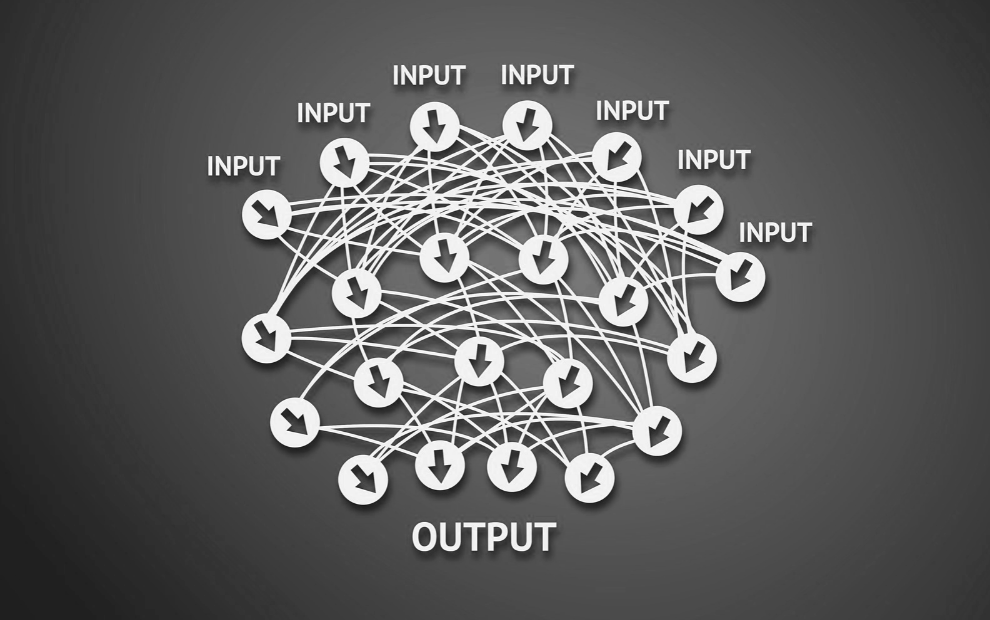
Once we accept that performance is dynamic and multifactorial, the challenge is not simply collecting more numbers. It is combining them intelligently.
The first step is still deciding what we are actually trying to understand. Which factors matter for this athlete’s performance-state? Which relationships are plausible? What is descriptive, and what might actually be modifiable?
That distinction matters. Some things help explain performance without giving us a lever to pull. Others point toward things we may actually be able to change.
McClean and colleagues use directed acyclic graphs as one example of how those assumed relationships can be made explicit. The value is not the graph itself. The value is being forced to define the question, the relationships, and the factors that may be worth acting on before asking any model to make sense of the data.
Once we have a clearer sense of the relationships we care about, machine learning becomes more useful. McClean and colleagues suggest that machine-learning models may help deal with the inherent complexity of performance by combining physical and nonphysical inputs such as biomechanics, training load, sport-performance outcomes, psychosocial factors, and context.
The point is not simply that a model can process more data. The point is that it may help us characterize performance-state from multiple interacting inputs at once rather than interpreting each variable in isolation.
But that creates another challenge. If a model gives us an answer, do we know what to do with it? The goal has to be to understand what is pushing that score up or down in a way we can actually act on.
And that brings us back to the point before any model: What relationships do we think matter, and which ones can we actually change?
Measuring what matters
We may never get one perfect measure of performance. And that may be the wrong goal anyway.
The goal is to build a better model of the athlete’s performance-state: where they are, what is shaping it, and how it is changing.
Availability matters. Recognizing the gap matters. But once we see that gap, we still need a way to navigate it.
That probably means accepting something uncomfortable: performance is complex. Measuring it should not require pretending otherwise.
Reference:
McClean Z, Morris N, Pasanen K, et al. Monitoring an athlete's performance-state after they return to sport is a significant challenge in ACL injury research and applied practice. Br J Sports Med. 2026;60(14):1007-1010. Published 2026 Jul 8. doi:10.1136/bjsports-2025-110899
TOMMY OTLEYPhysical therapist, sport scientist, educator, and researcher working at the intersection of rehabilitation and performance.

READ MORE

We like measuring performance, but the things we can measure are not always performance itself. This edition of The Film Room explores why performance is a moving, context-dependent state, why old benchmarks can fail to capture where an athlete should be, and how longitudinal monitoring and better synthesis may help us understand the path back. Performance is complex. Measuring it should not require pretending otherwise.